
2 mins
Callum Hackett

If you can't inspect how an AI reached its answer, what exactly are you trusting?
Neural models learn by starting with a predictive surface that's just a guess, making predictions, getting feedback about quality, adjusting the surface, and going through many rounds of feedback until it can't be improved any more.
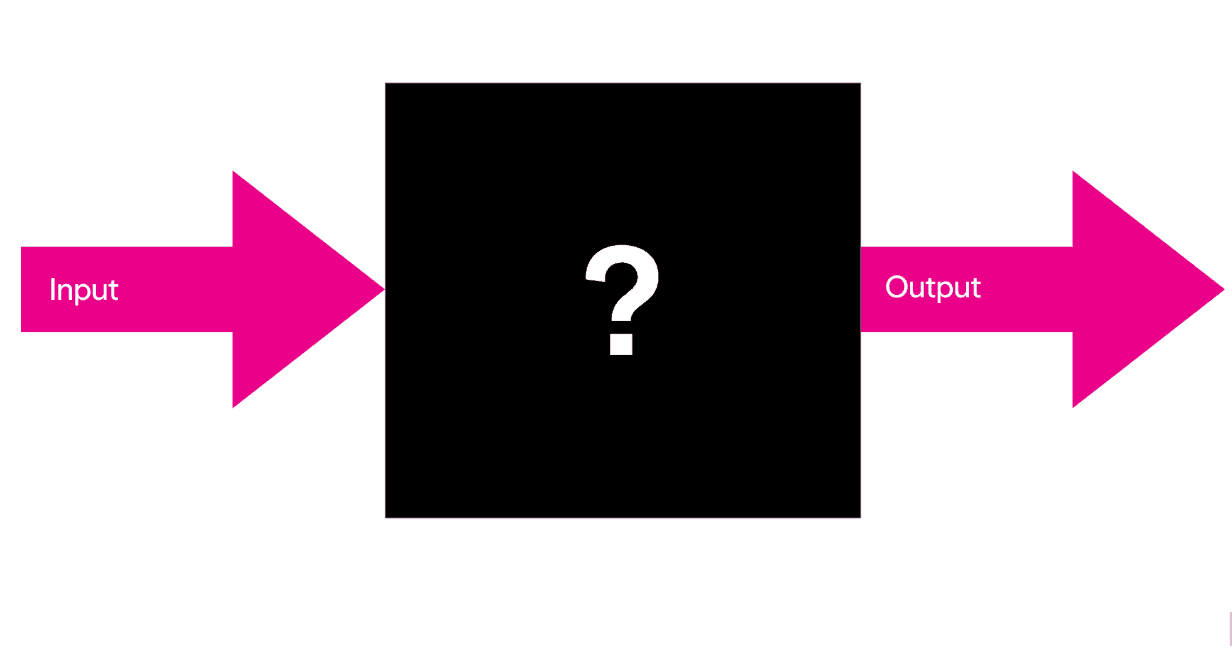
The issue is that we can't see what goes on inside these models. Not only can we not visualise thousands of dimensions - there's also no practical way of formulating the symbolic rules that would describe what the model has learned. This is why neural models are commonly called black boxes: you can see their inputs and outputs, but you can't see what happens in between.
When errors are normal
It's entirely normal for statistical models of noisy data to make mistakes. Often that's not a problem - if you can understand how a model works, you can analyse when and why errors occur, and mitigate them.
When errors are invisible
But black box models multiply the impact of any margin of error.
This is because you can't systematically inspect how predictions diverge from reality. Without that ability, you can't build up an understanding of when and why errors occur, so you can't effectively mitigate them.
This is why the hallucination problem is so damaging to trust: not only do you have to accept that mistakes will be made, you may not even know when you're looking at one.
The model sounds confident whether it's right or wrong. And you have no way of telling the difference without checking every output against an independent source - which defeats much of the purpose of using AI in the first place.
When AI fluency becomes a liability
The hallucination problem is really a transparency problem in disguise. A model that was wrong but inspectable would still be manageable; you could trace the error, understand its source, and know when to trust the output. A model that is wrong and opaque is something different: it asks for trust it cannot justify.
This is the deeper cost of the black box, it's that the model offers no mechanism for building the kind of understanding that would let you manage them. Until that changes, every confident output carries an invisible asterisk.